Traveller’s cheques never expire

American Express (Amex) traveller’s cheques never expire. However, they are no longer widely accepted.

Back in 2009, my Amex traveller’s cheques were issued by Citibank. With the uncertainty of the financial crisis, I was unsure where I would be settling in the world and I felt a lot better carrying a cheque worth around 1000 sterling than carrying the same amount in cash.

Things did not go according to plan; my adventure turned into a business misventure, and I returned home with my traveller’s cheques, unused.

Soon after issuing my cheques, Citybank no longer issued traveller’s cheques. They also would not take them back and were silly enough to tell me that they were worthless (read on to see why they are silly).

How to cash traveller’s cheques? HSBC does, in theory, accept traveller’s cheques in the same currency, but good luck finding a cashier counter that will accept them (or knows how to). Post Office – possibly just an Internet rumour now.

Electronic foreign exchange services, such as TransferWise, rarely accept traveller’s cheques. A currency exchange shop is probably your best bet. Ask if they accept traveller’s cheques (call them after checking the Amex website). However, this option can involve high fees.

Security is perhaps the best reason to use traveller’s cheques, but as explained above, the use of traveller’s cheques has decreased significantly over the years. Apart from touristy areas such as Dubai, it may be challenging to find places that accept them. Amex is really your last option; they can redeem your traveller’s cheques.

Tax free shopping

Dubai has gone from tax-free to tax refund.

My understanding was, for tourists at least, that you paid no tax on goods and services. This is no longer the case, except that if you are just visiting the United Arab Emirates and leave the country within 90 days, then you can claim a refund.

Dubai put a value-added-tax (VAT), of five percent, on most purchases, which applies to residents and tourists alike (for comparison, in Egypt and Jordan it is around 15%). For instance, you can no longer buy electronics tax-free at point-of-sale.

The story is that I bought a high-specification laptop, with an English and Arabic keyboard (naturally), from Virgin Megastore. They added my passport number to the Planet Tax Free system and informed me that the refund would be automatic when I pass through the electronic gate at the airport, but this did not happen.

I learned later that I was suppose to get the refund processed before check-in, at the airport, and that I might need to show the purchased item in an unused state. That last bit would of been a inconvenience for me as I wanted to test the laptop in the hotel before taking the device out of the country. Never mind.

Could be that the system will change again, i.e. it will be automatic in future. I hope so. That would make Dubai an attractive shopping destination again.

In conclusion, I missed out on a tax refund of around $70.  Oh well, at least I can continue to write using Arabic script.

Burj Khalifa

Burj Dubai Khalifa is the tallest building in the world, but is it worth visiting?

The tower is one of the newer developments and includes residential buildings, and a mall. In Arabic, Burj means tower and Khalifa is somebody’s name. Burj Khalifa literally means the tower of Khalifa.

Actually, it was originally to be named Burj Dubai and the renaming occurred during the financial crisis of 2009 when the sheikh of Abu Dhabi, Khalifa bin Zayed Al Nahyan, subsidised the project, thus construction was able to complete.

The view from the top is certainly interesting, but it was a crowded place (we arrived just before sunset) and I did worry about catching the Coronavirus 2019. Fortunately, I was fine. Being required to buy a ticket, I thought they would have taken a staggered approach with number of visitors, but I was wrong.

This is in contrast to my visit to Palm Island, for which the main contractor was Nakheel. Whereas for Burj Khalifa it was Emaar. However, we arrived at the Palm at around noon so a visit at non-peak hours could be the key.

With the Burj, there is a restaurant at a higher level and that could potentially be a better experience.

The tower is adjoining a shopping mall and leave this complex required a lot of patience. The queue for taxis was huge. Again, it could be timing or because of the union day celebration.

Dubai SIM card

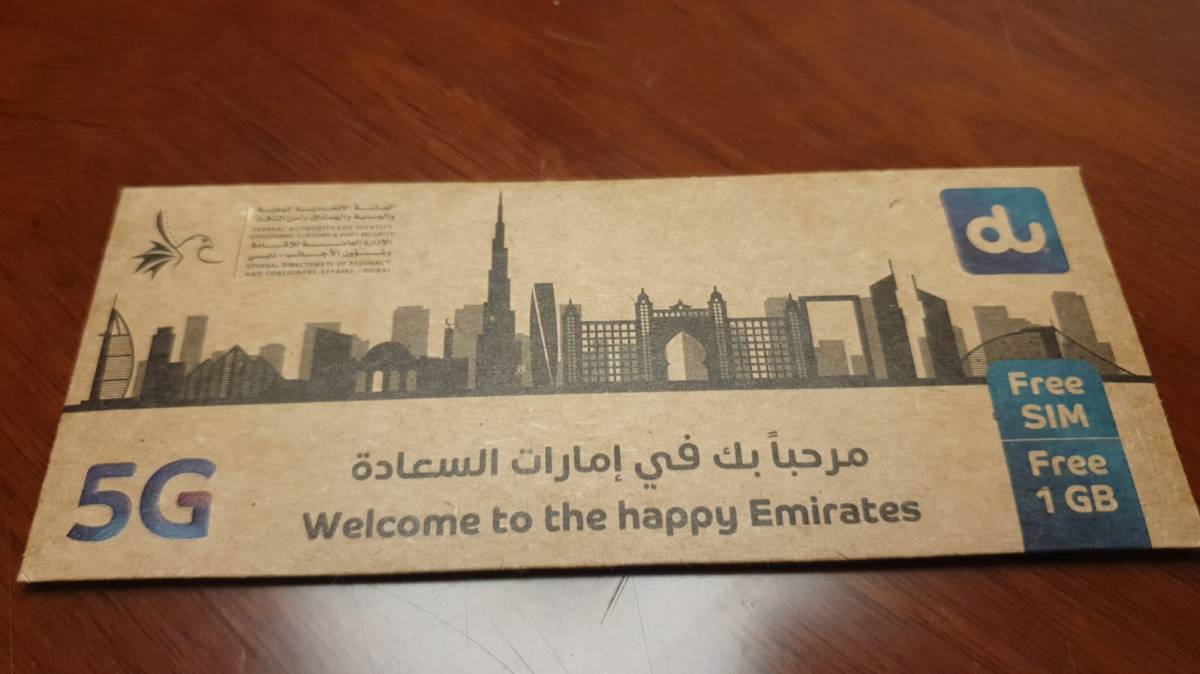
Do buy a SIM card when you are in the United Arab Emirates (if you see a good deal). The main network operator is Etisalat, but there is also du (دو). However, if you are planning to stay less than a few days, then an e-SIM might be a better option (ask the network operator about it in your country).

If you use the free du SIM card they give you in Dubai immigration, then that might not work when you return to Dubai, (if your first arrival to Dubai was transit). If you are in Dubai for a day or two, then the du SIM card might be worth it.

When you leave Dubai via the e-gates, your free du SIM card will automatically stop working. That SIM card was registered to you when you arrived (despite it still being within its packaging).

When returning to Dubai, if you want to use the same number (that came with your free Du SIM card), then you will need to visit one of the Du company branches and it could take a while. You probably wont be able to use the same ‘free’ SIM card and may end up with a new number. There you can also buy credit (top-up), but it is only value for money for longer stays.

While in UAE, you wont be able to use WhatsApp to make calls (only texting will work). However, there are local apps that you can use for calling, e.g. Tawasal, Botim. Alternatively, a VPN would allow you call via WhatsApp.

Ibn Jabal Institute – Arabic Language Courses in the UK and abroad

It had been some years since I first heard about some entity by the name of Ibn Jabal Institute.  As I did not actually sign-up for their mailing list, I originally thought it was some kind of scam.

However, over the years I heard some recommendations, including from volunteers of the Utrujj foundation and two students of the School of Oriental & African Studies (SOAS), one who seemed to eternally fail his first year of a degree including the Arabic 1 module and the other who already knew Arabic and was just looking for an easy first.

I was already put off by the SOAS (quasi) Language Centre.  I also did not want to return to full-time education, which is what a BA programme at SOAS (proper) would require.  Nor did I want to go abroad again.

So I decided to give Ibn Jabal a go.

Despite the positives I had heard, I was not convinced by their strange claims of being able to deliver the SOAS (proper) programme in even less time.  However, going against my better judgement, I went ahead anyway with the new plan for Arabic studies in the UK.

As the below letter of complaint illustrates (for which I never received a reply), it is an understatement to say that Ibn Jabal fell well below my expectations.

Ibn Jabal had been around for a long time, but it seemed that all of the teachers had either studied elsewhere or failed in their Arabic studies at SOAS.  Either way, they were the ones that seemed to benefit the most (in terms of learning) from the Ibn Jabal programme.

Dear Sir/Madam,

This is a letter of complaint regarding a Level 1 course I attended. The name of the teacher was *****-***** *******.

Admittedly I learnt something from the course (mostly relying on the course notes), but was shocked to find that the course was continually interrupted by the teacher preaching spirituality and his own understanding of Islam, sometimes randomly quoting passages from scripture but not being able to relate them to the course content.

Furthermore, I noticed the teacher did not understand all of what he was suppose to teach us and relied heavily on the course notes.

Before enrolling I heard positives about ibn Jabal from a few people and for approximately £500 I expected a reasonable standard of teaching and professionalism. Instead I’ve been put off from enrolling on Level 2.

I hope you will take this matter seriously and make amends immediately.

Faithfully.

Business misventure

It was during the financial crisis of late 2008 that I had to search for a new job.

I was tired of working for directors that made bad decisions and were still rewarded.  Meanwhile the rest of us worked very hard and were asked to be patient regarding the lack of career development as well as pay increases.

For many years previously, a friend of mine who had settled in United Arab Emirates often invited me to do the same.  Finally, I could resist the temptation no longer and the idea of doing a business with friends really appealed to me.  So off I flew!

My first time (almost five years before) in Dubai I saw the other side – the not as glittery holiday/vacation part.

For instance, in the construction industry, the labourers – they were usually imported from South Asia (mainly India) – were often working in the hottest (and I mean burning hot) conditions and would be staying in a work camp (with a fence around it).

On top of this it was not uncommon, I was told, that their low wage/salary be withheld/delayed.  However, this is experienced by many expats and is not job/industry specific.

To be fair, I’ve read more recently (think it was Gulf News) that the rulers/government want to change things, from above if need be, to ensure that foreign employees are no longer oppressed like this.

There was no shortage of building construction here.  There was more and more plans for yet a taller building; to the extent that some property developers, I was told, have kept silent (secret) on how high their tower shall be.

Some people quote the following tradition:
‘…that you will find barefooted, destitute goat-herders vying with one another in the construction of magnificent buildings..’ (Translation of Sahih Muslim, The Book of Faith (Kitab Al-Iman), Book 001, Number 0001).

During the most recent visits my perception of UAE changed somewhat.  It is not just about money or the enticement to do-buy.  The Emirates is one of the most stable countries in the Middle East and daily life is easy going except that in recent years there has been rising prices and an issue with the rush hour for some commuters (four hours one-way), but perhaps with the new train system and other developments the situation will improve.

Also, the summer is uncomfortable here, but perhaps no more difficult than the winter in Northern Europe.

Once I arrived in UAE, nothing ever happened, except that we talked and talked and talked.  I then fell back to auto-pilot mode and decided to complete my Arabic studies in Jordan (from the outside, it looked like a professional and stable place to study).  Learning the language, I thought, would be useful to living and doing business in UAE.  Plus, back in London, somebody had suggested that in UAE I could work as a middle-man between technology and management.

Unfortunately for me, my friends in UAE turned out to be fraudsters and I had chosen possibly the worse place on earth to study Arabic.

Demoralised and confused, I returned home.

Burj Al Arab

Burj al-Arab, tower of the Arab or tower of no Arab (burj la arab)?

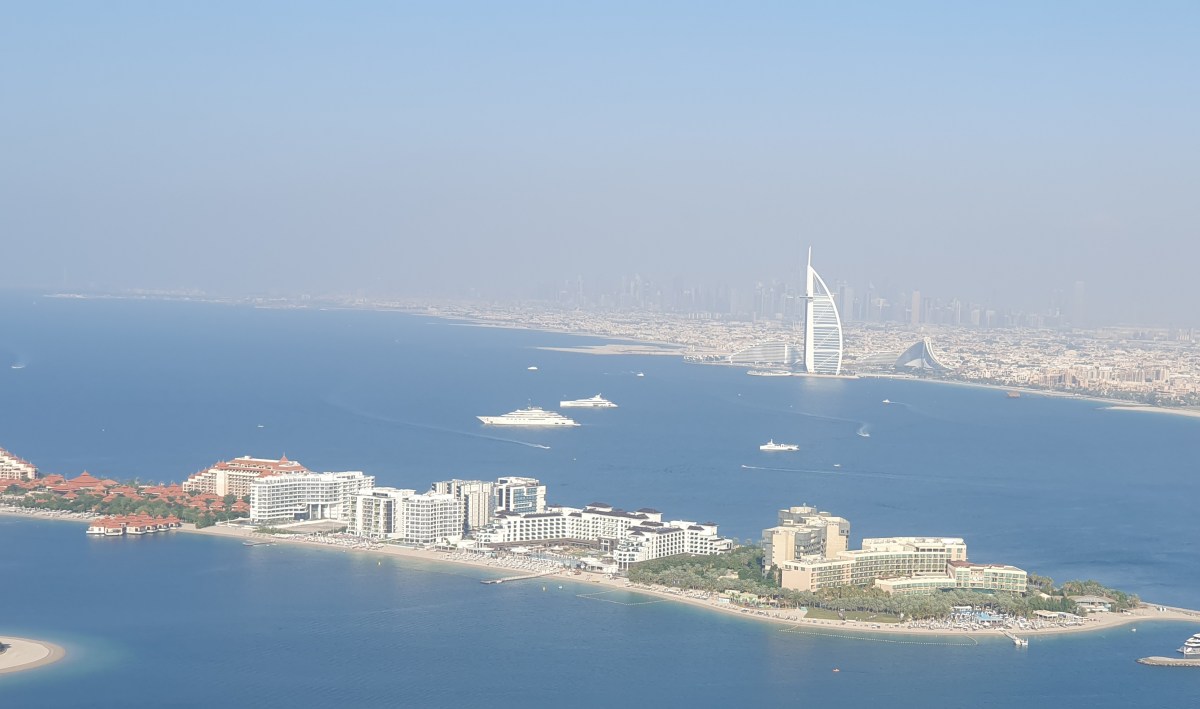
One of the world’s best hotels (so according to their web-site). Anyway, it is suppose to be seven star or something and I heard someone played tennis on the disc near the peak. And yes, it is suppose to look like a ship’s sail.

Some people go there for just a visit. However, be warned, male visitors must at the least be in shirt and shoes (no t-shirt and trainers) – and definitely not dressed in traditional Arab garbs. Or something like that. Sorry, but those were the rules.

Good news is that there is no particular dress-code for woman, so they are definitely not sexist.