Traveller’s cheques never expire

American Express (Amex) traveller’s cheques never expire. However, they are no longer widely accepted.

Back in 2009, my Amex traveller’s cheques were issued by Citibank. With the uncertainty of the financial crisis, I was unsure where I would be settling in the world and I felt a lot better carrying a cheque worth around 1000 sterling than carrying the same amount in cash.

Things did not go according to plan; my adventure turned into a business misventure, and I returned home with my traveller’s cheques, unused.

Soon after issuing my cheques, Citybank no longer issued traveller’s cheques. They also would not take them back and were silly enough to tell me that they were worthless (read on to see why they are silly).

How to cash traveller’s cheques? HSBC does, in theory, accept traveller’s cheques in the same currency, but good luck finding a cashier counter that will accept them (or knows how to). Post Office – possibly just an Internet rumour now.

Electronic foreign exchange services, such as TransferWise, rarely accept traveller’s cheques. A currency exchange shop is probably your best bet. Ask if they accept traveller’s cheques (call them after checking the Amex website). However, this option can involve high fees.

Security is perhaps the best reason to use traveller’s cheques, but as explained above, the use of traveller’s cheques has decreased significantly over the years. Apart from touristy areas such as Dubai, it may be challenging to find places that accept them. Amex is really your last option; they can redeem your traveller’s cheques.

Hizb ut-Tahrir and Communism

Hizb ut-Tahrir (HT) is a political party, which started its activities in the Middle East, then spread worldwide. It was founded in the 1950s by Taqi al-Din al-Nabhani. Like their off-shoot (who use to call themselves) al-Muhajirun, HT is banned in the United Kingdom.

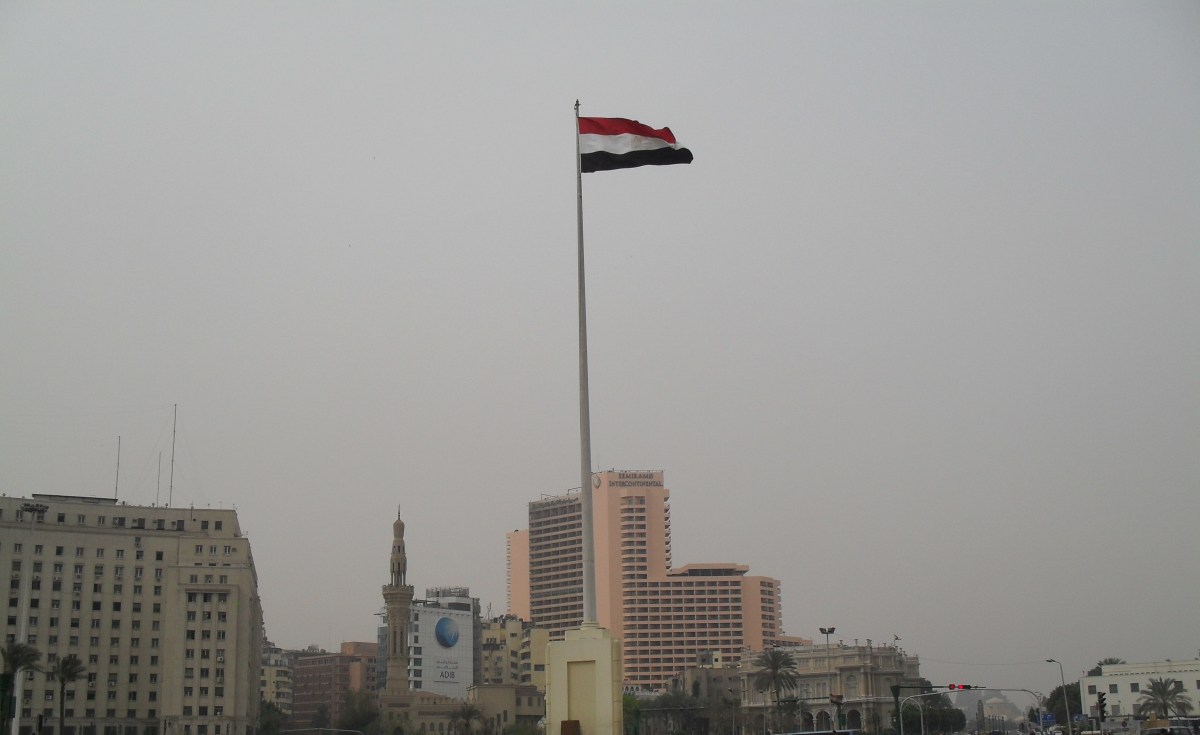
The name Hizb ut-Tahrir is from the Arabic language, hizb al-tahrir (حزب التحرير), and literally means party of liberation or liberation party. Hizb means ‘party’, al means ‘the’ and in a possessive construction works like ‘of’. Tahrir means ‘liberation’. Think of liberation square or square of liberation (ميدان التحرير) in Cairo, Egypt, i.e. Tahrir Square. This is the place where most protestors gathered during December 2010 (after which president Mubarak lost power).

I have found that Hizb ut-Tahrir shares a lot in common with so-called Bolshevism (early 20th century Russian Communism). Both are/were political parties/movements looking to seize political power, with the belief of restoring justice to the world.

The Hizb ut-Tahrir splinter group Muhajirun (founded by Omar Bakri) differs from HT in that they believe in establishing an Islamic State anywhere in the world; whereas HT primarily focuses on the Middle East (while recruiting elsewhere). Similarly, after Lenin’s death, the Communist Party began to have internal disagreements, the major one being between the Trotskyists (international or permanent revolution) and Stalinists (communism in one country).

When discussing democracy, Hizb ut-Tahrir will use the worst examples. Likely, they will reference the origins of the word, i.e. Athens, Ancient Greece (and not so much current day democracy in the UK). Further, HT believe that voting should be done within the party alone and not by the masses.

J. H. Arnold writes: “Democracy was born in ancient Athens, or so we like to believe; but no historian of antiquity would equate the government of that city with twentieth-century representative politics. The founders of the American Constitution spoke of ‘rights’ in universal and ‘natural’ terms (‘We hold these truths to be self-evident…’), but they did not believe that women or the poоr should have the vote, and they owned slaves. They were not complete hypocrites, but partly products of their time, and of what they took for granted in their world.”

Bolsheviks saw parliamentary democracy (around 19th/20th century) as a bourgeois democracy (representing those with wealth) and believed the later Soviet system (elected worker councils) to be the real democracy. However, in practice, real power lay with the Communist party (in front of which was a public façade of Soviet democracy) and over time the people became disillusioned with Soviet rule. Meanwhile, the petty democracies of Western Europe became more inclusive of the masses.

It is a part of the methodology of Hizb ut-Tahrir that in order to gain power in the Middle East, they would need to convince the military to carry out a coup d’état. This need not be bloody, but history shows that military coups are rarely bloodless (for instance in Syria or Iraq, etc). Likewise, the Bolsheviks also believed in taking power by force and did so in November 1917, resulting in over a dozen deaths. In addition, their lack of cooperation with others and disregard of the (elected) constituent assembly was followed by a bloody and painful civil war.

If/once the military coup is successful, HT’s plan is the setting up of a one-party state, i.e. Hizb ut-Tahrir, which would keep in check the (HT appointed) caliph/president. As explained already, alongside the Soviet democratic structure, the Bolsheviks also set-up a one-party state, which is really what governed the country.

Just as the Bolsheviks saw themselves as the vanguard of the working-class, Hizb ut-Tahrir also sees itself as the vanguard of the Muslims. There is no debate outside the party, only inside. After all, they are the true intelligentsia, or so they think.

Hizb ut-Tahrir operates in semi secrecy. They organise somewhat public lectures for their supporters and recruitment purposes, and private courses for those who aspire to become members. Before the 1917 revolution, the Bolsheviks similarly operated in a semi-underground fashion.

Hizb ut-Tahrir claims to follow classical texts from the Muslim tradition. For example, they will mention Imam Shafi’s Risala. However, they also contradict this book. For instance, they do not have faith in ahad hadith (prophetic narratives with fewer chains), yet Imam Shafi’s book includes a chapter on accepting habar al-wahid, (which includes a narrative referring to the story of Musa and Khidr). Similarly, Bolsheviks were criticised for not having the correct interpretation of Das Kapital (by Karl Marx). For example, the so-called Mensheviks believed that socialism could be achieved via a peaceful transfer of power, from the industrialists to the proletariat. Indeed, during the civil war, they (with other socialists) managed to set-up a short-lived egalitarian society (before it was absorbed by the counter-revolutionists, etc).

Hizb ut-Tahrir sometimes claims that they have a purely political focus, but in order to become a member one actually must take on their creed (aqueeda), which is not exactly Muslim orthodoxy or the majority Muslim faith. For details, ask the Sufis and the Wahhabis. Initially, the Bolsheviks were also in contrast to perhaps the majority of the social democratic movement, but since they were able to take power (for almost a century) their version of socialism is the one that became prominent in the first half of the 20th century. For instance, the authorities in 1920s Germany associated socialism locally (perhaps wrongly) with what they heard about happening within Soviet Russia.

Hizb ut-Tahrir’s notion of an Islamic State was never realised in the 20th century; despite their founder saying it would take no more than 30 years. Meanwhile, the Bolsheviks were in power for over 70 years, but did not achieve socialism.

Sources:
https://www.theguardian.com/uk-news/2024/jan/15/islamist-group-hizb-ut-tahrir-to-be-banned-organising-uk
https://www.britannica.com/topic/Bolshevik
Arnold, John H. History: A Very Short Introduction. 2000. Oxford University Press.

Citibank

Silly Bank Citibank is one of the largest and most well-known banks in the world, providing a wide range of financial services and products to individuals, businesses, and governments.

To join, one had to be earning at least 30,000 or so. They used to offer a Visa debit card, which was quite rare at the time (2006).

A current account in Sterling was always free with them, but not really. Sometimes, without asking permission, they would add me to some sort of premium account. The only different being that they would charge a monthly five dollar fee thereafter. I had to call them multiple times to resolve the issue.

The main benefit for joining Citibank were the free foreign currency accounts (e.g. USD, Euro, Yen). However, ten years later they started charging a monthly fee (per account) without informing me. The exception was if the account was dormant.

Unfortunately, one day, they convinced me to make all three active, but I insisted on activating just two. My original request to was for activating the dollar account. I was going abroad. Can you imagine my horror, once I noticed on my statement that I was being charged 10 dollars a month.

I also obtained my traveller’s cheque via Citibank. 20 years later, they were silly enough to tell me they were worthless.

Tired with dealing with a silly bank, I stopped depositing my pay cheques with them. I think that was reason they decided to close my account. At first it was like an inconvenience, but then it was a burden lifted.

For traditional banking I primarily use HSBC and for foreign currency I mainly use Transferwise. No more headaches.

Ibn Jabal Institute – Arabic Language Courses in the UK and abroad

It had been some years since I first heard about some entity by the name of Ibn Jabal Institute.  As I did not actually sign-up for their mailing list, I originally thought it was some kind of scam.

However, over the years I heard some recommendations, including from volunteers of the Utrujj foundation and two students of the School of Oriental & African Studies (SOAS), one who seemed to eternally fail his first year of a degree including the Arabic 1 module and the other who already knew Arabic and was just looking for an easy first.

I was already put off by the SOAS (quasi) Language Centre.  I also did not want to return to full-time education, which is what a BA programme at SOAS (proper) would require.  Nor did I want to go abroad again.

So I decided to give Ibn Jabal a go.

Despite the positives I had heard, I was not convinced by their strange claims of being able to deliver the SOAS (proper) programme in even less time.  However, going against my better judgement, I went ahead anyway with the new plan for Arabic studies in the UK.

As the below letter of complaint illustrates (for which I never received a reply), it is an understatement to say that Ibn Jabal fell well below my expectations.

Ibn Jabal had been around for a long time, but it seemed that all of the teachers had either studied elsewhere or failed in their Arabic studies at SOAS.  Either way, they were the ones that seemed to benefit the most (in terms of learning) from the Ibn Jabal programme.

Dear Sir/Madam,

This is a letter of complaint regarding a Level 1 course I attended. The name of the teacher was *****-***** *******.

Admittedly I learnt something from the course (mostly relying on the course notes), but was shocked to find that the course was continually interrupted by the teacher preaching spirituality and his own understanding of Islam, sometimes randomly quoting passages from scripture but not being able to relate them to the course content.

Furthermore, I noticed the teacher did not understand all of what he was suppose to teach us and relied heavily on the course notes.

Before enrolling I heard positives about ibn Jabal from a few people and for approximately £500 I expected a reasonable standard of teaching and professionalism. Instead I’ve been put off from enrolling on Level 2.

I hope you will take this matter seriously and make amends immediately.

Faithfully.

Fountain of lies

I use to know a Dajani of Jordan (with Palestinian and Circassian heritage), who I think had spent more time outside Amman than inside, including Egypt, Morocco, Canada and the United Kingdom.  In fact, he eventually married a lady in the UK while studying for a masters at the School of Oriental and African Studies (SOAS).

I use like the Dajani (for being knowledgeable in humanities), but he once explained to us that the Jordanians (of east bank origin) are not really Muslim.  For instance, according to him, there was once a street protest and the police arrived to contain it.  Behind them were intelligence.  The demonstrators were using religious chants.  Whereas on the police side, cursing of the prophet of Islam could be heard.

The last time I met him, he argued (with me) that learning Arabic only takes around six months!  Of-course he was lying and for this reason as well as pressuring me to socialise with his friends in Jordan, who were always speaking English or, if I was ‘lucky’, speaking colloquial.  However, colloquial is not normally taught in Jordan so I never understood, except the bit when it’s clear that they hate Wahhabis, which after hearing many times sounds the same in every language.  Also, always trying to get me to attend Thursday Sufi dance sessions, and something they called dikr with bikr.  Eventually, I gave up being his friend.  I was annoyed; I felt that rather than be a true friend, he attempted to weasel and I did not like that one bit.

How can a true Sufi behave like this?  However, with hindsight, he was a saint compared to somebody else we knew.

Qadeer Ali, who studied Arabic with/and Islamic studies at SOAS, and (despite supposedly a friend) contributed to the toxic environment (described above).  Qadeer Ali also encouraged me to dikr with bikr, arguing that it is beneficial for my learning of Arabic, (but not for his obviously).  Probably Qadeer did not want to attend himself (perhaps he only did it so he could get free accommodation with the Dajani, who could be very generous) and felt it only fair that I should force boredom upon myself also.  He finished off with giving me a handwritten copy of all the verb conjugations.  I already had this in my books, but he insisted that I take it as a souvenir.  He should have given that to the guy who failed his Arabic (see below).

In their hearts is a disease, so God has increased them in disease, and for them is a painful punishment because they used to lie (2:10).

In addition, an Arabic-turned-history-turned-media student also joined in the frenzy.  He always had a chip  on his shoulder; I’m guessing because he studied at Ibn Jabal, but failed the first year of BA Arabic at SOAS and then aspired to annoy me. 

Admittedly, the Dajani had much better manners (on most days) than the two Brits put together.

Actually, originally, I really wanted to be his friend (of-course I’m only talking about the Dajani), but I later realised that he always had another agenda and the lies just pissed me off.

Sure, I’m not exactly perfect myself, but I don’t make it my life’s mission to recruit people, by any means.

Saudi Research & Marketing

HH Saudi Research and Marketing publishes and distributes a number of Arabic newspapers and magazines.

I joined one of these departments with an open mind and it seemed quite suitable as it required IT with Arabic skills.

After the first week things started to get complicated.  They wanted me to sign a new contract without my team leader knowing.  Basically, they wanted me and him to work shifts over the weekend.  I did not mind except that I had to keep the contract a secret.  This was silly because he would find out anyway.

My team leader had a low opinion of the director and the company, but of course he sold the role to me during the interview.  He mentioned how the directors and the managers of the various publications only got their jobs due to some connection with the Saudi prince (perhaps a link between their tribe and the royal family).  He also mentioned that the director of our publication had a low opinion of Egyptians and was a drinker (except when his parents came down to visit, which is also the only time he would visit the mosque).  He said he sometimes felt sorry for our colleagues in Cairo as they did not get credit for the hard work they use to do.

The director was impolite and sometimes rude, especially when I had not learnt everything from my team leader (fast enough in his opinion).  This was impossible as my team leader was often off work, mostly due to an ‘eye infection’.*

Things started to get annoying when one of the new members of the news team appeared to have some sort of sectarian agenda.  She said that she is Assyrian and I replied Syrian wow – I visited Syria, but she re-iterated that she is of ‘the original people’.  She spared no effort in informing me that the Turks had committed genocide against her people, forcing them to speak Turkish and converting them to Islam.  She also often spoke ill of Arabs and Palestinians.

In addition to that she disliked the gypsies in Britain and spoke ill of their culture.

Eventually, I understood that the crux of her issue was that during the Ottoman period, some of the Assyrians supposedly colluded with foreign powers (against the Ottoman Empire).  The Ottoman response was forced relocation to other parts of the empire (far from the borders).  Sometimes this resulted in a very large number of deaths.

Furthermore, in the 1930s, the Iraq army crushed a supposed uprising of separatists in the north of the country, but her hatred of Arabs went beyond the 20th century.

After the Arab conquests (of the 7th century), some people started to Arabize (adopting the language of the new rulers and in some cases conversion).  During the medieval period, this process accelerated.  Sometimes there was pressure or incentives.  Other times, it was freedom of choice.

A similar process occurred during the Roman period.  For example, for the people in the conquered lands, joining the army became a means of social mobility in the new empire.  The dominant languages were Roman and Greek.  And previously, under Alexander, a process of Hellenization took place.

Perhaps for these reasons, in the present day, most peoples of the Middle East speak a dialect of Arabic and are Muslim.  Other religions also exist, particularly various denominations of Christianity as well as other languages (although modern standard Arabic is the official language of most Middle Eastern states).

In addition, there were many Jews spread out across the Middle East.  In the twentieth century, many of them moved to Israel and abroad (Syrian Jews mostly emigrated to the USA), but some have remained, for example in Morocco and Iran.  Recently, in Alexandria, Egypt, a synagogue reopened.

The Assyrian working in HH Saudi also saw Arabisation as a period of persecution, which further explained her hatred of Arabs.  For this reason, she believed the Palestinians deserved what they got.

As listening to her was not bad enough, a newer member of the team was recruited and, after joining the debate, introduced himself as a non-Coptic Egyptian (similar to Omar Sharif?).  He claimed that after the conquests, the Arabs stole the lands of the Egyptians.  In his view, the Palestinians were not the only Middle Eastern people who had suffered in history.  So why should they complain so much?

Their Tunisian colleague contended this by saying that the Arabs established military compounds, such as Fustat (outside of the existing settlements), which literally started as army barracks and slowly, over time, developed into cities and sometimes capitals.

Over the course of 1,500 years the Middle East saw a lot of things and some were blaming a whole race of people or civilization for what one leader or ruler ordered or did not order or some thing that was definitely out of order.  Is it really possible to have surveillance of every citizen, police officer and army soldier (especially in a time of war)?

Due to the director’s lack of manners, I left this job and then realized how retarded and toxic the debates in the office had been.  Truly, that in itself was enough reason to leave the company.  A decision I should have made much sooner.

Since leaving, I heard that a director of another publication in the same company had also left.  However, unlike me, he had been sacked!  Sacked for trying to molest his new secretary.  Apparently, previously, he had done the same thing to somebody in HR and when she resisted, he had her sacked.  I also heard that he had subsequently gone on pilgrimage.  Why?  May be because of remorse?  I hope so.  Or perhaps because he is one of those retards who thinks that by doing some religious ritual he can be cleansed of any sin even if he goes back to the same sin again.

May be this is what happens when promotion is based more on who you know and has little or nothing to do with a meritocracy.

Alas, they will never catch up.

*later he confided in me that it was caused by gonorrhea and not conjunctivitis.
SOAS Language Centre

When I first discovered the SOAS Language Centre, I used to get lost around Russell Square…

Back in the days, I tried learning Urdu and Arabic at the Language Centre. I did not want to waste any time and thought university to be best environment.

However, this language centre had nothing to do with the degree programmes at the School of Oriental and African Studies. Rather, this was part-time study in the evenings, taught by non-faculty staff.

For Urdu, I never really progressed with the grammar, perhaps because I started in too high a level. However, they were the ones who chose the level for me.

As for Arabic, initially it seemed rather fun and engaging, but I was eventually put off. My first teacher (native speaker from Egypt doing a PHD) would somewhat teach us colloquial even though it was a Modern Standard Arabic (MSA) course.

My final teacher (a Palestinian from Syria studying a masters) was not much better, she often criticised MSA constructs because nobody uses them in speech.

It was like they needed to be often reminded that we (the students) had paid to be taught MSA.

One thousand pounds later, most of us felt that we had not learned anything useful. Frustrated, I somewhat turned my back on learning foreign languages.

Perhaps I should have taken this as a bad omen for studying in the Middle East.

British and French mandatory policies in Iraq and Syria between the two World Wars

Here I compare and contrast Iraq with Syria (specifically what later became the country Syria as opposed to Greater Syria, which might include Lebanon), focusing on political and economic sovereignty. After the First World War, the League of Nations entrusted the Iraqi mandate to the British Empire and the Syrian mandate to the French Empire. Initially, both Iraq and Syria came under direct rule from Britain and France respectively, but later experienced limited self-rule and eventually gained independence. However, as will be shown, the timetable and method used by these ‘former’ colonial Powers differed greatly.

Iraq was constructed from the three Ottoman provinces: Basra, Baghdad and Mosul. By the end of the First World War, Britain more or less occupied all three territories and for economic and security reasons decided to consolidate them. From ‘1921 Britain adopted a policy of devolving responsibilities to an ‘Iraqi’ government.’ This government was headed by a monarch and for that the British chose Faisal Husain (of the Hashemite dynasty, which had led the Arab revolt in Arabia during the First World War), who was forced to leave Syria (see below). Consequently, the new political and military elite of Iraq were made up of Amir Faisal and his Sharifian entourage – most of whom were Sunni Arabs. However, over half the Arab population were Shi’a, who did not trust British ambitions and were not keen with the idea of the new state if it did not fairly represent the Shi’a majority. In other words, a Shi’a nation ruled by a Sunni ex-Ottoman elite. This was complicated further by the Mosul province that included part of the ‘homeland’ of the Kurdish people (most of whom were Sunni). Including all three provinces in the new Iraq made the Shi’a the minority. However, Kurdish tribal leaders sought more autonomy and had significant support amongst their people. In addition to force and limited Iraqi self-rule, Britain used patronage to pacify the Iraqi leaders. Eventually, this worked with some of the Shi’a leaders in the South (especially after the main mujtahids had left for Iran).

Syria was also constructed from smaller Ottoman entities. The mandate (approved in 1922) ‘defined the objective of French rule as “to facilitate the progressive development of Syria and Lebanon as independent states”.’ However, France initially implemented policies similar to those used in its existing colonies elsewhere. Instead of using Amir Faisal to work towards an independent state, they ejected the ‘Arab nationalist Hashemite-led administration’ (that had arrived in Syria’s capitol of Damascus before the French) and replaced it and the previous Ottoman institutions. Syria’s Muslim population was eight-five percent, but unlike Iraq, the majority of Syria’s population was Sunni Muslim. They also made-up most of the traditional ex-Ottoman elite, but France had demoted their status by giving preference to minority groups (some of whom had been neglected by the Ottomans) . Many of the officials of the new administration were Frenchman and also lacked the necessary language skills (although this changed later). Most of the natives they employed were usually Christian and rarely Sunni Muslim. The ‘French staff officers generally held a low opinion of Arab Muslims, Kurds, and Druzes’ and even had a low opinion of the Syrian Officials they did employ. Even though in the long term, a large number of Frenchman were stationed in Syria there was little attempt to assimilate with the native people.

British policy towards Iraqi rule had initially been represented ‘by those who came to be known as the ‘imperial school’.’ For this reason direct rule had been attempted initially, but due to widespread dissatisfaction and unrest (which was seen as a result of direct rule and was very costly to suppress), it was decided that a more indirect form of rule should be pursued. This long term policy of indirect rule was illustrated in November 1920 when an ‘Iraqi’ government was formed, headed by the naqib al-ashraf of Bagdad, Sayyid ‘Abd al-Rahman al-Kailani, and with twenty-one Iraqi ministers. It was Sunni dominated but the ministers were from all three provinces and included a few Shi’a and Christians and one Jew. Here at least the British were taking note of Iraq’s demographics. The former Ottoman administrative units and municipal councils were also restored, ‘and Iraqi officials began to replace British political officers in the provinces (except in the Kurdish district of Sulaimaniyyah).’ However, British advisors assisted the Iraqi officials in the provinces and were attached to the new ministries. In June 1921 a ‘bogus referendum was held in which it was claimed that 96 per cent of the population of Iraq accepted the new king’ Faisal Husain ‘and on 23 August 1921 Faisal was ceremoniously enthroned.’ Britain control of Iraq was via treaties and in 1922 an Anglo-Iraqi treaty recognised the devolving of power to the Iraqi government. However, control was retained by Britain of financial, international, security and certain judicial affairs . This treaty was opposed by a great number of the masses as well as the elites. It is argued that Iraq had no choice but to accept the 1922 treaty, and that Britain gave the Constituent Assembly an ultimatum to ratify it. The meaning of this is that Iraq had not achieved full political sovereignty, nor did it have zero control over its affairs, but that Britain indirectly controlled Iraq. This in essence was the mandatory policy of Britain between the wars.

While Britain tried to unite the three provinces of Iraq, the French decided to divide Syria into three autonomous regions ‘with separate areas for the Alawis on the coast and the Druze in the south.’ Also, politically the French did not give any representation to the majority Sunni population whereas in Iraq representation was given to the Shi’a – albeit not accurately reflecting their percentage of the population. The ‘French administration was an oversized and expensive bureaucratic ship’ and eventually much of the financial burden of defence and public security was shifted onto the Syrian people. In Iraq the British were somewhat concerned with cost-effectiveness and therefore decided on indirect control. In other words, the British were prepared to use any means to gain from the Iraqi mandate (even as late as 1930 a treaty was signed – see below). Whereas the French were determined to keep direct control over the population, which in practice meant denying opportunities to the majority. In Iraq, an Arab nationalist (Amir Faisal) had become king, but in Syria the nationalists were denied the top jobs. Both Britain and France used and would continue to use force in their mandates. However, France’s method of relying on minorities and a large foreign administration (and army) was both costly and unstable. This also denied political experience to the Syrians when the state finally became independent.

Economic policy in Iraq could be dictated by patronage, which might include tax exemptions. Land-reform was sometimes used in order to maintain the power of the pro-Hashemite ruling elite or pacify potential enemies of the state. Several development projects had been planned and even implemented during the 1920s, however, most of the King’s energies and resources were devoted to ensuring his political survival. In the 1930s, the King had encouraged agricultural development, but lack of interest from affluent Iraqis and the British to invest meant that production from this sector was not increased. Britain’s significant economic policy towards Iraq concerned oil and via the Turkish Petroleum Company (TPC) Britain acquired favourable concessions. Therefore, apart from oil, Britain did not really develop Iraq’s economy and in the 1930s Iraq faced economic difficulties. However, this is in part due to the world-wide economic recession – starting in 1929. Moreover, Britain’s economic policies were not directly harmful to the local economy.

On the other hand, French economic policy included controlling Syria’s monetary system. This fixed a new Syrian currency to the Franc, which later caused problems when the French currency lost it value to the US dollar. France also sold public utilities to French businesses and the transfer of the Muslim-owned Hejaz Railway to a French railroad company in 1924 caused a big outcry and protest in Syria. According to P. S. Khoury, the French violated the Mandate charter by favouring French business to the extent that it did not allow equality of opportunity to all members of the League of Nations. Also, the French High Commission unfairly served the interest of French businesses by manipulating markets, which caused harm to Syrian businesses. For example, false rumours of a bad harvest were spread and then grain exports were banned. French agents were then able to buy grain cheaply and sell at a higher prices when the borders were re-opened for export. There was generally a lack of encouragement or will (on the part of the French) to develop the Syrian economy, but only to further French commercial interests.

Britain’s significant policy in Iraq was intended to safeguard her trading interests in the Basra province and elsewhere and to guarantee access to oil in the region. This meant pursuing a very difficult policy of nation-building a state made up of the three most ethnically and religiously diverse Arab-majority regions of the former Ottoman Empire. The Ottoman Empire had hitherto administrated these lands as separate decentralised provinces. But Britain wanted a buffer (Baghdad) for the southern Basra province and a buffer (Mosul) for Baghdad and its policies were indifferent to the local situation. Oil made a unified Iraq even more important and it was vital to maintain the power of the Hashemite King (who was Arab, had religious significance and a British ally). As long as Britain’s commercial and security objectives were met her policy was quite relaxed in other areas. Existing elites were encouraged to work with the largely new Sharifian elites. Also, there was not much intrusion in religion, for example, the Organic law of 1925 made Islam the state religion. The main issue of the Shi’a was political power – they were under-represented. In Syria, however, the French decided and maintained a large presence and left the country only as late as 1946. Their policy was direct rule and economic control. Britain’s and France’s policies were similar in that neither country wanted true sovereignty for their mandates. The British would only support it as long as their interests were satisfied so their intentions were similar to the French. The difference is whereas Britain’s policies can clearly be seen as paving the way for Iraqi native rule, France’s policy is seen by P. S. Khoury and W. L. Cleveland as though Syria was a mandate only by name, and in practice a newly acquired colony to exploit and deny sovereignty to.

Bibliography

Cleveland, W. L, A History of the Modern Middle East, 1994, Boulder.

Eppel M, Iraq from Monarchy to Tyranny: From the Hashemites to the Rise of Saddam, Florida: 2004, University of Florida.

Khoury, P. S, Syria and the French Mandate: The Politics of Arab Nationalism 1920-1945, London: 1987, I. B. Tauris & Co. Ltd.

Tripp, C, A History of Iraq, Cambridge: 2000, CUP.

Yapp, M.E. The Making of the Modern Near East 1792-1923, London: 1987, Pearson Education.