Traveller’s cheques never expire

American Express (Amex) traveller’s cheques never expire. However, they are no longer widely accepted.

Back in 2009, my Amex traveller’s cheques were issued by Citibank. With the uncertainty of the financial crisis, I was unsure where I would be settling in the world and I felt a lot better carrying a cheque worth around 1000 sterling than carrying the same amount in cash.

Things did not go according to plan; my adventure turned into a business misventure, and I returned home with my traveller’s cheques, unused.

Soon after issuing my cheques, Citybank no longer issued traveller’s cheques. They also would not take them back and were silly enough to tell me that they were worthless (read on to see why they are silly).

How to cash traveller’s cheques? HSBC does, in theory, accept traveller’s cheques in the same currency, but good luck finding a cashier counter that will accept them (or knows how to). Post Office – possibly just an Internet rumour now.

Electronic foreign exchange services, such as TransferWise, rarely accept traveller’s cheques. A currency exchange shop is probably your best bet. Ask if they accept traveller’s cheques (call them after checking the Amex website). However, this option can involve high fees.

Security is perhaps the best reason to use traveller’s cheques, but as explained above, the use of traveller’s cheques has decreased significantly over the years. Apart from touristy areas such as Dubai, it may be challenging to find places that accept them. Amex is really your last option; they can redeem your traveller’s cheques.

You get what you pay for (sometimes)

A Jordanian (with Palestinian background, who had grown-up in the Kingdom of Saudi Arabia) suggested to me that I could study Arabic in Saudi Arabia (KSA) – for free!

However, I had already met a Korean, who had moved from KSA, who was then studying at the Arab Community College (ACC) in Amman.  On a hill opposite the hospital – a boring place, which is as effective as the Language Centre of Jordan University except that you get what you pay for (whereas at UJLC you pay way more for what you gain – if anything).

As usual, the smart students are the ones who had already studied elsewhere or who already knew some colloquial Arabic.  The rest of the students simply stagnate and end-up repeating levels (so no real cost-saving here).  I also knew a few Chinese students who had already studied at the UJLC, but they still could not (or would not) speak Arabic so no benefit on that front either.

As for the Korean, he started off as intermediate and came alone (like myself) and was forced to communicate (in Arabic) with those who knew no English.  Most of the students at ACC were from the country-side in South-Eastern Europe, southern Russia and the ex-Soviet states, and (unfortunately for them, but fortunately for me) did not learn English effectively while they were at school (unlike in UJLC where most of the students already knew basic English and would rather practice improving this with those of us who were from England).

When asked why he had left Saudi, the Korean described KSA as a harsh place.  In fact, as well as learning Arabic, he was also interested in getting married in Jordan and, luckily (but unfortunately luck might not help him when dealing with nationalism), at least some of the girls, studying Korean, at the University of Jordan wanted to practice speaking with him.

He also asked me if it was easier to get married in Egypt. By that time, I’d only lived in Alexandria, which was not very different to Jordan (in terms of final outcome) so was unsure what to say to him.  Too bad I didn’t speak to him after Cairo (see below).

Continue reading “You get what you pay for (sometimes)”

Psychopath

He told me he was Chechen, which was unusual as most of them would hardly talk to me (or to anyone other than their own).  He was actually from Kazakhstan.  I never got the details, but I remembered having once learned that, during the time of Stalin’s reign, some Chechens had been deported from their native homeland.

I first met this Chechen from Kazakhstan in a private library in Jordan and noticed that his spoken Arabic was not great (despite him studying in the Faculty of Literature).  So I took it with a pinch of salt when he told me that he knew an awesome centre in Alexandria.  However, I started to like him due to the fact he tried to speak in Arabic and we shared a common nostalgia regarding Alexandria.

Guess we became friends after I went through a crisis at the language centre, UJLC.  He had suggested I talk to the president of the centre and so I did.  By that time, the Chechen had studied Arabic for three years (including one year at the Faculty of Literature) and his spoken skills were impressive.  I even had arguments with him about politics and religion in Arabic (with great difficulty).

Things became really complicated when he made a big issue of a friendship I had with a 65 year old woman in London.  According to him, this is forbidden in religion.  I was puzzled by his argument.  How could it be like this when he had become busy hanging out with a Russian lady at the language centre (who had been briefed before departure from her country that she could count on him)?  I challenged him on this point and the Chechen said that he could conceivably develop feelings for her and therefore it was wrong, (but strangely he would continue his friendship with her).  So I asked why that was an issue when he could simply marry her.  Why prefer to stay single when he could marry a girl he trusts?  However, his response was that he would never marry a Russian after how they destroyed his homeland.

In fact, on the basis of this debate we were having, his teenage flat-mate (also Chechen and actually from Chechnya) told me that they are good Muslims and I am a bad Muslim (while shouting at me in the street).  He then explained that at least they admit it is haraam.  However, the truth is (according to ibn Taymiyya* as I understand it) faith is not simply words, but it is also actions, which is why God says in the Quran ‘those who believe and do righteous deeds’ or ‘believe and establish the prayer’ (for example).

Explaining this to them made no difference, just as explaining to them that in religion they can not make something forbidden unless there is a textual evidence for it (with regard to matters other than those relating directly with God or in other words – the worldly life, i.e. transacting with the creation).

Eventually, I suggested we go to the Faculty of Religion in the University of Jordan to ask one of the experts about the issue.  He did not like this idea and said that Jordan is not the place for learning religion.

Continue reading “Psychopath”

Mr Toxic

The conversation started with why, in the end, I had not studied for a masters in history.

Despite my passion for this subject, the answer for me was simple: the banking crisis of 2008 and the subsequent personal financial loss in the United Arab Emirates (UAE).

Apparently, I had misunderstood the situation.  Qadir Ali argued that studying the Arabic language in Alexandria would lead to a job and a better career.  He also tried to convince me that I am not the engineering type and that my degree in computer science was a mistake.

The opposite is true.  By following his plan, I lost more than three years and was over 100,000 dollars (financially) worse off.

When looking back, it is very clear that one cannot trust most of what he says.  Was a liar, is a liar and probably always will be a liar.

The truth is that Qadir Ali only joined a FANG company (Facebook, Apple, Netflix, Google) after attaining a 1st class Arabic (and Islamic studies) degree from the School of Oriental and African Studies (SOAS) and not from Alexandria, but this was not before being unemployed for six months and then working as a sales-type for a hardware company, for a year, based in some village near High Wycombe.

While encouraging me to leave an IT career, I later learned, he was studying  the Japanese language and Machine Learning; perhaps eyeing a Google (Alphabet) career in Japan?

As late as 2013, I was having doubts about his plan for me, but he told me to man-up and compared me to a mutual friend (of an expat family from UAE) who had studied eastern history exclusively with English texts (hence, in his opinion, a loser).

He also tried to convince me that I need to do at least four years of Arabic in order to study history at SOAS.  Qadir Ali made this claim despite knowing that according to the professor (the convenor of the history module, which I was interested in) two years of Arabic would probably be fine (and all I would probably need is a few months revision).  He also kept it to himself that I could purchase the actual course Arabic texts from the SOAS bookshop, (which I could focus my attention on, but I guess that would lead to a more successful outcome and that is not really what he wanted – as became clear later).  In the end, he even recommended I do a degree (3-4 years) in Arabic at Leiden university.

Qadir Ali misled me about Alexandria.  For example, he promoted the library as open 24-7 when actually it’s open only until around 5pm.  He described the city as the most beautiful place in the Middle East, but failed to mention the mountains of rubbish (that you will come across every 1000 metres).

He claimed that the programme in Alexandria was superior to that in SOAS and that the SOAS graduates could not speak Arabic.  He should know (I thought), he studied in both places.

Before going out there, he insisted I study Egyptian Colloquial Arabic (ECA), but after I enrolled for both Modern Standard Arabic (MSA) and ECA, he explained that the colloquial course is rubbish and that I needed to sit in the smoke-filled coffee houses to learn the dialect (therefore, thanks to him, 850 US dollars immediately wasted in fees to a racist institute).  He also wanted to send me Egyptian dramas (perhaps illegally downloaded), suggesting this is the way to learn. 

Why then did he tell me to enrol at the TAFL center in Alexandria? 

What was his motivation for deceiving me?  Was he bored with his translation career.  Is Dublin, Ireland not as exciting as he imagined?  Did it anger him for not being able to find a job in London?  Or does he regret not following a different career path; one that would sooner lead to a job in his hometown of Newcastle?  Or was he fed-up of sharing apartments with strangers and not being able to afford a one-bed flat and save money at the same time.  Or was it for his retarded ego?

With hindsight, I should have left him from day one.  Back then (five years ago), Qadir was often abusing people, but perhaps we felt sorry for him because he started out his student life in London by sleeping on the buses.  I also thought he genuinely wanted to be my friend and (much) later (on) wanted to help me sort out my career.  I use to think that his rough side was due to his upbringing in Newcastle (never been there myself), but this was a misconception.  He was simply aspiring to be a fountain of lies.  I guess his definition of friendship was different from mine.

After Qadir returned from his year abroad in Alexandria, I was excited to meet up with him in Hampstead Heath (where is was staying), but he had an abusive attitude (that I had to correct before continuing) and I found him with a cigarette in his mouth, which I ignored (perhaps at my own peril), which I did not expect for a person who did not even want to go to the cinema with us.  Was it really because he could not afford such entertainment, (but then how could he afford cigarettes)?

Another omen was when Qadir seconded the opinions of the mixed-heritage guy from Jordan, but later criticised him in a phone-call to me (as a way back into my life – I now realise).  Much later, once he was confident again in his use of weasel words, he justified the Jordanian mixed-heritage guy’s retarded arguments or downright lies.

What did I do to deserve this?  Had I not been a friend?  He use to brag about being working-class and perhaps, for a while, I saw myself in him (not the bragging bit) – working my hardest to get out of poverty and then to culture myself and help others.

My father once said, that (as a child) he always preferred the poor over the rich.  Perhaps that only works in the countryside or perhaps times have changed.  Whatever the reason, now I know from experience, you cannot judge a person by their economic background.

At least a couple of times, I paid for his lunch/dinner and encouraged him to study hard and not concern himself with the lack of motivation of his rich-kid classmates, which he was becoming increasingly obsessed about (whose parents were always going to sort them out with money or a job).

I even invited Qadir to my parent’s home where he enjoyed my mother’s cooking, and my late father had sincerely welcomed him.  However, none of this appears to have made a difference.

Three years from now, he will honour me with impoverishment and a ruined academic (and working) career.  I suppose we should expect no less from somebody who aspires to be a munafiq.

The hypocrites will be in the lowest depths of Hell, and you will find no one to help them (4:145).
Fountain of lies

I use to know a Dajani of Jordan (with Palestinian and Circassian heritage), who I think had spent more time outside Amman than inside, including Egypt, Morocco, Canada and the United Kingdom.  In fact, he eventually married a lady in the UK while studying for a masters at the School of Oriental and African Studies (SOAS).

I use like the Dajani (for being knowledgeable in humanities), but he once explained to us that the Jordanians (of east bank origin) are not really Muslim.  For instance, according to him, there was once a street protest and the police arrived to contain it.  Behind them were intelligence.  The demonstrators were using religious chants.  Whereas on the police side, cursing of the prophet of Islam could be heard.

The last time I met him, he argued (with me) that learning Arabic only takes around six months!  Of-course he was lying and for this reason as well as pressuring me to socialise with his friends in Jordan, who were always speaking English or, if I was ‘lucky’, speaking colloquial.  However, colloquial is not normally taught in Jordan so I never understood, except the bit when it’s clear that they hate Wahhabis, which after hearing many times sounds the same in every language.  Also, always trying to get me to attend Thursday Sufi dance sessions, and something they called dikr with bikr.  Eventually, I gave up being his friend.  I was annoyed; I felt that rather than be a true friend, he attempted to weasel and I did not like that one bit.

How can a true Sufi behave like this?  However, with hindsight, he was a saint compared to somebody else we knew.

Qadeer Ali, who studied Arabic with/and Islamic studies at SOAS, and (despite supposedly a friend) contributed to the toxic environment (described above).  Qadeer Ali also encouraged me to dikr with bikr, arguing that it is beneficial for my learning of Arabic, (but not for his obviously).  Probably Qadeer did not want to attend himself (perhaps he only did it so he could get free accommodation with the Dajani, who could be very generous) and felt it only fair that I should force boredom upon myself also.  He finished off with giving me a handwritten copy of all the verb conjugations.  I already had this in my books, but he insisted that I take it as a souvenir.  He should have given that to the guy who failed his Arabic (see below).

In their hearts is a disease, so God has increased them in disease, and for them is a painful punishment because they used to lie (2:10).

In addition, an Arabic-turned-history-turned-media student also joined in the frenzy.  He always had a chip  on his shoulder; I’m guessing because he studied at Ibn Jabal, but failed the first year of BA Arabic at SOAS and then aspired to annoy me. 

Admittedly, the Dajani had much better manners (on most days) than the two Brits put together.

Actually, originally, I really wanted to be his friend (of-course I’m only talking about the Dajani), but I later realised that he always had another agenda and the lies just pissed me off.

Sure, I’m not exactly perfect myself, but I don’t make it my life’s mission to recruit people, by any means.

Business misventure

It was during the financial crisis of late 2008 that I had to search for a new job.

I was tired of working for directors that made bad decisions and were still rewarded.  Meanwhile the rest of us worked very hard and were asked to be patient regarding the lack of career development as well as pay increases.

For many years previously, a friend of mine who had settled in United Arab Emirates often invited me to do the same.  Finally, I could resist the temptation no longer and the idea of doing a business with friends really appealed to me.  So off I flew!

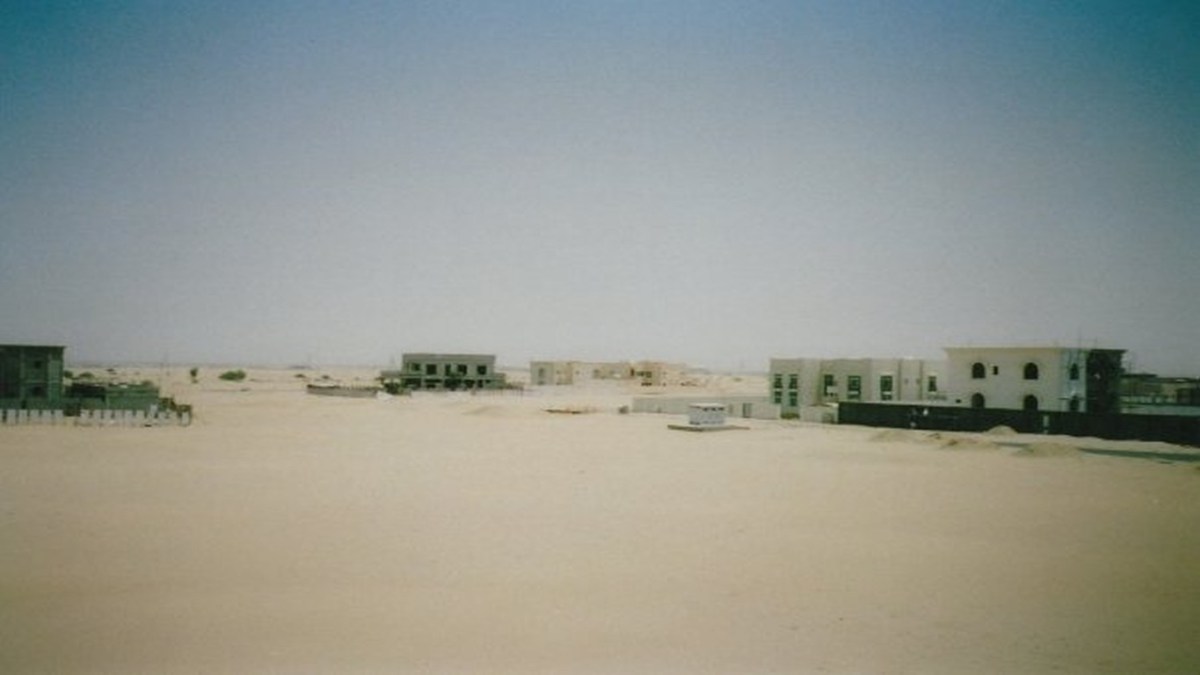
My first time (almost five years before) in Dubai I saw the other side – the not as glittery holiday/vacation part.

For instance, in the construction industry, the labourers – they were usually imported from South Asia (mainly India) – were often working in the hottest (and I mean burning hot) conditions and would be staying in a work camp (with a fence around it).

On top of this it was not uncommon, I was told, that their low wage/salary be withheld/delayed.  However, this is experienced by many expats and is not job/industry specific.

To be fair, I’ve read more recently (think it was Gulf News) that the rulers/government want to change things, from above if need be, to ensure that foreign employees are no longer oppressed like this.

There was no shortage of building construction here.  There was more and more plans for yet a taller building; to the extent that some property developers, I was told, have kept silent (secret) on how high their tower shall be.

Some people quote the following tradition:
‘…that you will find barefooted, destitute goat-herders vying with one another in the construction of magnificent buildings..’ (Translation of Sahih Muslim, The Book of Faith (Kitab Al-Iman), Book 001, Number 0001).

During the most recent visits my perception of UAE changed somewhat.  It is not just about money or the enticement to do-buy.  The Emirates is one of the most stable countries in the Middle East and daily life is easy going except that in recent years there has been rising prices and an issue with the rush hour for some commuters (four hours one-way), but perhaps with the new train system and other developments the situation will improve.

Also, the summer is uncomfortable here, but perhaps no more difficult than the winter in Northern Europe.

Once I arrived in UAE, nothing ever happened, except that we talked and talked and talked.  I then fell back to auto-pilot mode and decided to complete my Arabic studies in Jordan (from the outside, it looked like a professional and stable place to study).  Learning the language, I thought, would be useful to living and doing business in UAE.  Plus, back in London, somebody had suggested that in UAE I could work as a middle-man between technology and management.

Unfortunately for me, my friends in UAE turned out to be fraudsters and I had chosen possibly the worse place on earth to study Arabic.

Demoralised and confused, I returned home.