
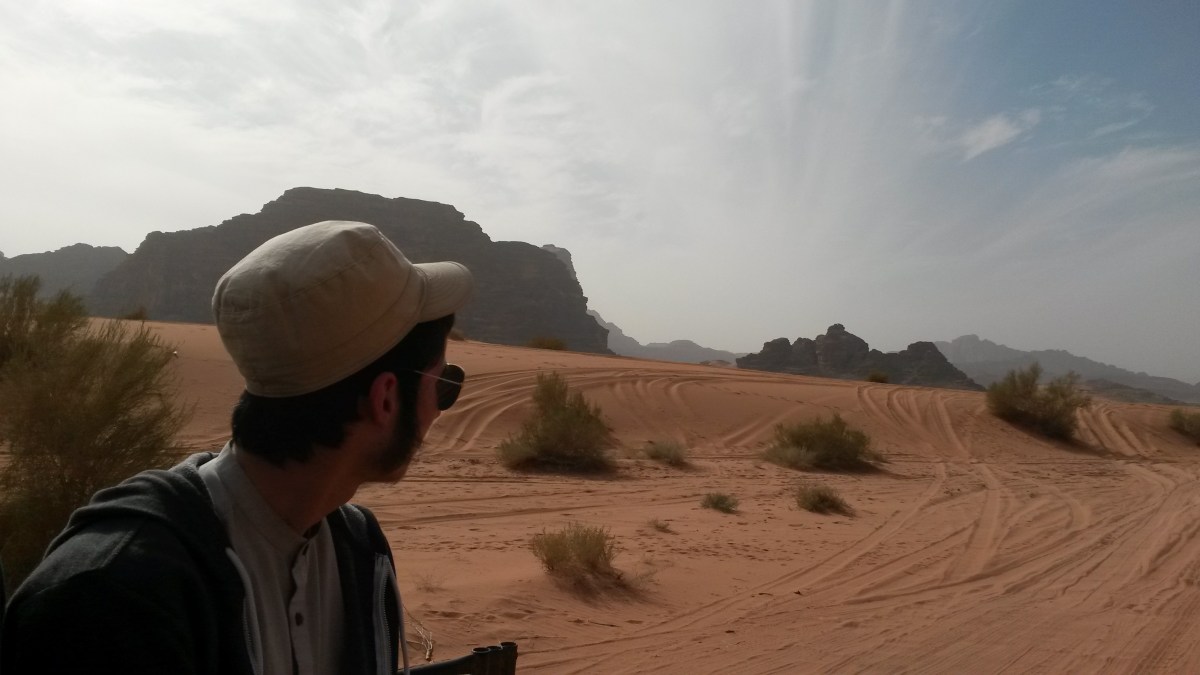
He told me he was Chechen, which was unusual as most of them would hardly talk to me (or to anyone other than their own). He was actually from Kazakhstan. I never got the details, but I remembered having once learned that, during the time of Stalin’s reign, some Chechens had been deported from their native homeland.
I first met this Chechen from Kazakhstan in a private library in Jordan and noticed that his spoken Arabic was not great (despite him studying in the Faculty of Literature). So I took it with a pinch of salt when he told me that he knew an awesome centre in Alexandria. However, I started to like him due to the fact he tried to speak in Arabic and we shared a common nostalgia regarding Alexandria.
Guess we became friends after I went through a crisis at the language centre, UJLC. He had suggested I talk to the president of the centre and so I did. By that time, the Chechen had studied Arabic for three years (including one year at the Faculty of Literature) and his spoken skills were impressive. I even had arguments with him about politics and religion in Arabic (with great difficulty).
Things became really complicated when he made a big issue of a friendship I had with a 65 year old woman in London. According to him, this is forbidden in religion. I was puzzled by his argument. How could it be like this when he had become busy hanging out with a Russian lady at the language centre (who had been briefed before departure from her country that she could count on him)? I challenged him on this point and the Chechen said that he could conceivably develop feelings for her and therefore it was wrong, (but strangely he would continue his friendship with her). So I asked why that was an issue when he could simply marry her. Why prefer to stay single when he could marry a girl he trusts? However, his response was that he would never marry a Russian after how they destroyed his homeland.
In fact, on the basis of this debate we were having, his teenage flat-mate (also Chechen and actually from Chechnya) told me that they are good Muslims and I am a bad Muslim (while shouting at me in the street). He then explained that at least they admit it is haraam. However, the truth is (according to ibn Taymiyya* as I understand it) faith is not simply words, but it is also actions, which is why God says in the Quran ‘those who believe and do righteous deeds’ or ‘believe and establish the prayer’ (for example).
Explaining this to them made no difference, just as explaining to them that in religion they can not make something forbidden unless there is a textual evidence for it (with regard to matters other than those relating directly with God or in other words – the worldly life, i.e. transacting with the creation).
Eventually, I suggested we go to the Faculty of Religion in the University of Jordan to ask one of the experts about the issue. He did not like this idea and said that Jordan is not the place for learning religion.
 Arabian Misadventures